
From Mathematical Precision to Intelligent Risk Leadership
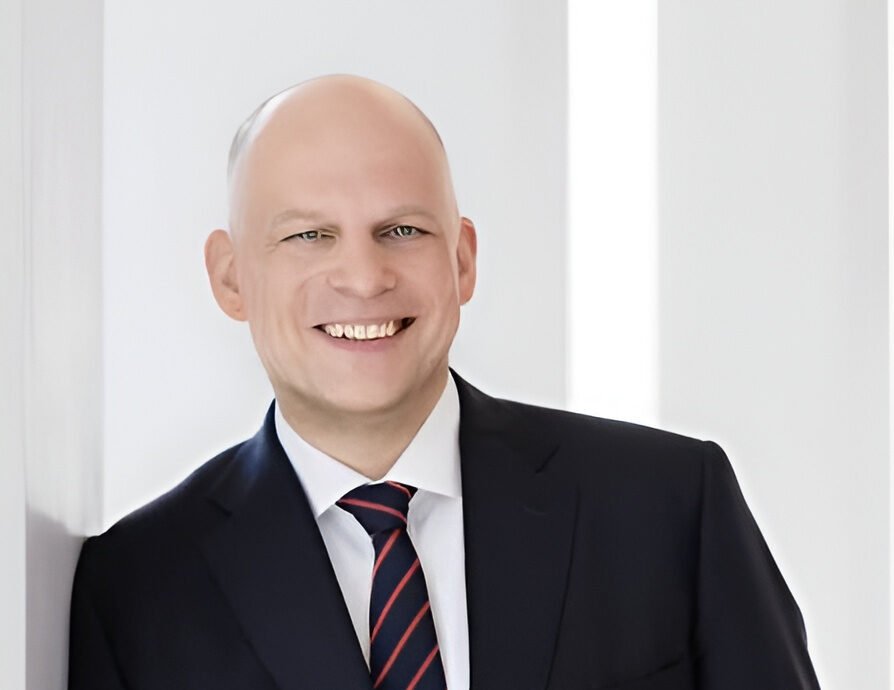
Risk management in global banking increasingly demands more than experience with traditional financial models. It requires the ability to interpret complex systems, recognize emerging patterns and make informed decisions as conditions change. Marcus Chromik brings an unusual analytical foundation to that challenge. A physicist by training who earned a Ph.D. in nuclear physics from Ludwig Maximilian University of Munich, he has spent more than two decades applying that analytical discipline to finance, capital markets and risk management. Deutsche Bank’s current corporate governance information confirms his appointment to the Management Board in May 2025 and his subsequent assumption of the Chief Risk Officer role.
Chromik joined Deutsche Bank in March 2025 after an extensive career in German banking. He began his banking journey at Deutsche Postbank in 2004, holding leadership positions across risk controlling, primary capital markets, liquidity management and credit treasury. In 2009, he moved to Commerzbank, where his responsibilities expanded across market and credit risk before he became Chief Risk Officer and a member of the Management Board in 2016. He remained in that position until the end of 2023, giving him eight years of experience at the highest level of a major European bank’s risk function.
His experience also extends beyond executive banking roles. In 2024, Chromik served as a non-executive director and member of the Risk Committee at UniCredit in Milan before returning to an operating leadership role at Deutsche Bank. That combination of executive and board-level experience has given him exposure to risk from both management and oversight perspectives.
At Deutsche Bank, Chromik is responsible for Group Risk Management, covering areas including credit, market, treasury, liquidity, enterprise and operational risk. The breadth of that mandate reflects how interconnected modern banking risks have become. A change in market conditions can affect liquidity; geopolitical developments can influence credit exposures; technology can create both operational vulnerabilities and new tools for managing them. Effective risk management increasingly requires these dimensions to be understood together rather than in isolation.
One of the most notable elements of Chromik’s current approach is his focus on artificial intelligence. Deutsche Bank has highlighted his view that AI represents a structural change for the risk function because it can process enormous quantities of structured and unstructured information, identify patterns and support decision-making in ways that traditional approaches cannot easily replicate. Within the bank’s credit processes, AI-generated analysis can help accelerate preparation and consistency, while credit officers continue to review, challenge and validate the outputs.
That human element remains important to Chromik’s perspective. His discussion of AI at Deutsche Bank emphasizes that technology should augment rather than eliminate human judgment. Credit professionals remain responsible for challenging the analysis and making decisions, while AI can allow them to devote more time to higher-value questions. Deutsche Bank has also described his emphasis on critical thinking, communication and the confidence to challenge decisions as enduring skills for the next generation of risk professionals.
This approach illustrates a broader shift in the role of the Chief Risk Officer. Risk is no longer simply the organizational function responsible for identifying threats and putting boundaries around them. Increasingly, it is also becoming an information and intelligence function—one that can help leadership understand complex signals, respond earlier and make better-informed strategic choices.
For Chromik, that evolution connects naturally with his scientific background. Physics is fundamentally concerned with understanding complex systems, relationships and changing conditions. His career has taken that analytical mindset from academic research into financial markets and ultimately into the leadership of risk at one of Europe’s major global banks.
As financial institutions confront geopolitical uncertainty, changing economic conditions, increasingly sophisticated financial crime and rapid advances in artificial intelligence, the risk function itself is being transformed. Chromik’s leadership at Deutsche Bank reflects that transition: combining established banking discipline with new analytical technologies while retaining human judgment at the center of consequential decisions.
His career demonstrates how the future of risk management may increasingly depend on bringing together three capabilities—deep financial expertise, analytical thinking and technological fluency. At Deutsche Bank, Marcus Chromik is operating at precisely that intersection, helping shape a risk function designed not only to understand uncertainty, but to respond to it with greater speed, intelligence and discipline.